Guides
Tote Bags: Where They Come From, What They Are For and How They Are Made
What is a tote bag? Learn where totes come from, what they are used for, canvas vs jute vs non-woven, how a tote is made and how to pick a good one.
Key takeaways
- A tote bag is a large, usually open-topped bag with two parallel handles rising from the sides of the main pouch. It's mostly used for shopping and everyday carrying.
- In North American English, tote means to carry. The word was first recorded in 1677, and the phrase tote bag in 1900.
- The main tote materials are cotton canvas, jute, non-woven polypropylene, polyester, recycled fabrics, and leather or PU. Each one suits a different job and budget.
- Most totes are printed or embroidered on flat fabric panels before they're stitched. The handle joints get reinforced with box stitching or bar tacks, because that's where totes fail first.
- A cotton tote is only greener than a plastic bag if you reuse it many times. So the honest advice? Buy a durable tote and keep using it for years.
What is a tote bag?
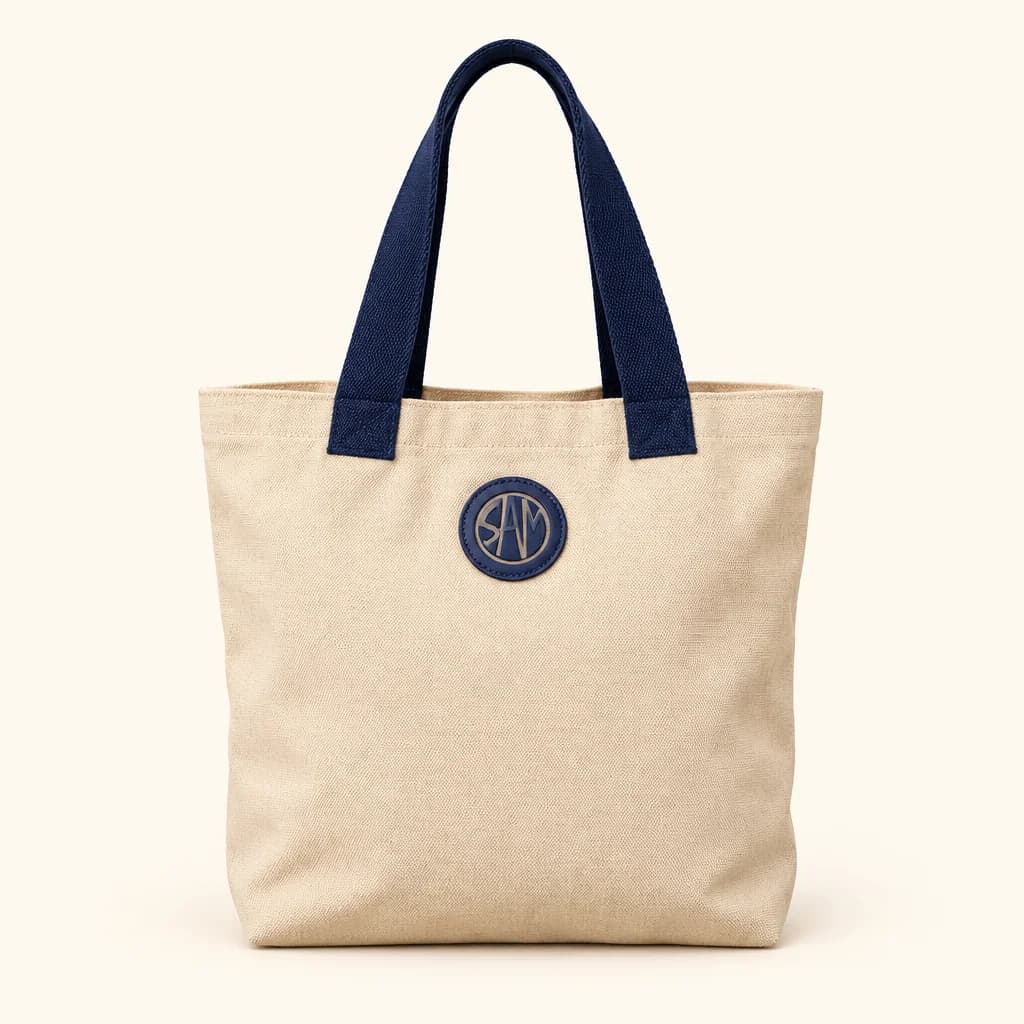
A tote bag is a large, usually unfastened bag with two parallel handles that rise from the sides of its main pouch. It's that simple open-topped bag you throw groceries, books, a laptop sleeve or a change of clothes into. Most totes have no zip or closure at all, and that's exactly why they're so quick to load and empty.
The Wikipedia entry on the tote bag describes it in much the same way, and notes that totes often get used as reusable shopping bags. Natural canvas and jute are common fabrics, along with nylon and other easy-care synthetics.
Shape and handles are what set a tote apart. A sling has one long strap you wear across your body. A backpack has two shoulder straps and sits on your back. A handbag usually has a closure and some structure inside. A tote, though, is wide, roomy and deliberately simple. Have a browse through our tote bag collection for everyday styles.
Where does the tote bag come from?
Let's start with the word. "Tote" is North American English for "to carry", and Wikipedia reports it was first recorded in Virginia in 1677. Nobody's quite sure where it came from. A West African root was suggested at one point, but that theory's since been discredited. So the honest answer is that no one knows for sure.
The phrase "tote bag" turns up first in 1900. And for a long time it just meant a plain bag for hauling stuff around. It wasn't a fashion item or a branding tool.
The modern canvas tote is often said to have taken off in the United States in the 1940s, as a sturdy bag for carrying ice and supplies. That story gets repeated a lot, and it suits the bag. Heavy canvas, an open top and strong handles are exactly what you'd design if you had to haul heavy, awkward loads.
From there, the tote slipped into everyday life. It became a beach bag, a library bag, a shop's own branded carrier and, more recently, a reusable swap for plastic carry bags. In India the idea goes back a long way too. Think of the cloth and jute jhola that families have taken to the market for generations.
What tote bags get used for today
Totes are popular because one bag can do lots of jobs. These are the uses we see most across Indian homes, campuses and offices.
- Shopping: vegetables, groceries and kirana runs, especially now that thin plastic carry bags are restricted.
- College: notebooks, a water bottle and a charger. Plenty of students keep a tote alongside a backpack from our college bags range for the lighter days.
- At the office, it's a tiffin, a laptop in a padded sleeve, some files and an umbrella when the monsoon's in.
- For the beach or a trip, it's an easy extra for towels, snacks and a book, or a fold-flat spare for holiday shopping.
- Gifting: a tote is packaging that keeps getting used long after the Diwali hamper or wedding favours are opened.
- Events and conferences: delegates get a kit bag for the programme, notepad and handouts. Our conference and event bags checklist walks you through planning one.
- Promotion and branding. A printed tote carries a logo round town every time someone uses it, which is why companies, colleges and coaching institutes order them in bulk.
- And as a reusable alternative to plastic bags, a sturdy tote replaces lots of single-use carry bags if it's used regularly.
What are tote bags made of?
The material decides how a tote feels, how much it'll carry, how well a logo prints on it and how long it lasts. You'll come across these six most often.
Cotton canvas
Canvas is a heavy-duty plain-woven fabric, traditionally made from cotton. It's soft to touch, takes print beautifully and gets comfier the more you use it. It's the classic tote material, and it's what our canvas bags are built on.
Jute
Jute is a long, soft, shiny plant fibre that gets spun into coarse, strong threads. Jute totes look rustic and earthy. They stand up well on their own, and people love them for gifting. The weave's rougher, though, so very fine print detail is harder to get.
Non-woven polypropylene
Non-woven bags are made from plastic fibres bonded into a sheet instead of woven. They're light and cheap, which is why you see them at one-day events and as retail giveaways. But they're less durable, and they don't age nearly as well as fabric.
Polyester, recycled fabrics, leather and PU
Polyester is light, dries quickly and wipes clean easily, so it's good for the monsoon and for foldable shoppers. Recycled fabrics, like recycled cotton blends or recycled polyester, reuse material that already exists. Leather and PU (polyurethane, a coated fabric with a leather look) go into structured, fashion-led totes for the office and evenings out.
| Material | Feel and look | Strength | Printing | Best for |
|---|---|---|---|---|
| Cotton canvas | Soft, matte, natural or dyed | Good to very good, depends on weight | Excellent for screen print and embroidery | Everyday use, college, branded totes |
| Jute | Coarse, rustic, holds its shape | Very good for heavy loads | Fair, best with bold simple designs | Gifting, grocery, eco-themed events |
| Non-woven polypropylene | Light, slightly papery | Basic, for light loads | Good for simple one or two colour logos | One-day events, retail giveaways |
| Polyester | Smooth, light, often foldable | Good, resists water | Good with screen print or heat transfer | Travel, monsoon, foldable shoppers |
| Recycled fabrics | Varies, often slightly textured | Varies by blend | Good, test a sample first | Sustainability-led branding |
| Leather and PU | Smooth, structured, premium | Very good when well made | Limited, usually debossing or a metal badge | Office, fashion, premium gifts |
Torn between the two most popular natural options? Here's the short answer on jute bag vs canvas. Jute's stiffer and better for heavy, bulky shopping. Canvas is softer, more versatile and better for detailed printing.
What fabric weight means for a tote
Fabric weight tells you how much material is in a piece of fabric. In India it's usually given in GSM, or grams per square metre, and now and then in ounces. A higher number means more fibre in the same area, so the fabric's usually thicker and denser.
Put simply, a light canvas feels thin and floppy. It folds up small and is fine for a carry-and-forget giveaway. A heavier canvas feels firm and holds its shape on a table. It'll carry books and groceries without stretching, and it'll survive years of washing. Most good everyday totes sit somewhere in between.
But weight isn't everything. A heavy fabric with weak stitching at the handles will still fail. When you're comparing quotes, ask for the fabric weight in writing, then judge it alongside the stitching and handle construction we describe below.
How a tote bag is made, step by step
A tote looks simple, but the order of the steps matters. In particular, printing or embroidery is usually done on the flat fabric panels before they're stitched together, because a flat panel sits evenly under a screen or an embroidery hoop.
- Design and size: the maker settles the width, height, gusset depth, handle length, material and branding position, then makes a pattern.
- Fabric cutting: the fabric's laid out in layers and cut into front, back, gusset and handle pieces to match the pattern.
- Printing or embroidery: the logo or artwork goes onto the flat panels. In screen printing, ink is pushed through a mesh stencil, one screen for each colour.
- Next the front and back panels are stitched together along the sides and bottom. The raw edges are usually turned in or overlocked so they don't fray.
- Gusset for depth: a separate gusset strip, or boxed corners folded and stitched at the base, gives the bag depth so it can stand up and hold bulky things.
- Handles: these are folded, stitched and attached to the inside of the opening. Then they're reinforced at the stress points with box stitching (a square with a cross through it) or bar tacks (dense, short zigzag stitches).
- Finishing means hemming the top edge, adding any lining, pocket, snap or zip, and trimming loose threads.
- Inspection and packing: each bag is checked for stitching, print quality and finish, then folded and packed.
The handle joint is where most totes give way, because the whole load hangs off a few square centimetres of fabric. Reinforcement there is the best single sign of a well-made tote. For more on stitch types and seam checks, see our guide on how to identify a good quality bag.
Screen printing isn't the only way to brand a tote. Embroidery, heat transfer and patches all have their strengths, and our post on logo branding: embroidery vs printing compares them properly.
How do you choose a good tote bag?
Buying one tote for yourself, or a few hundred for an event? Check these five things before you decide.
- Handle length: longer handles let you carry the tote on your shoulder, which is easier when it's heavy. Shorter ones are for carrying in your hand. Try it on with a coat or kurta, since thicker clothes change the fit.
- Gusset: a tote with a gusset or boxed base has depth, stands upright and fits a lunch box or bulky groceries. A flat one's fine for files and light things.
- Most totes are open at the top. If you commute by bus or metro, or carry a laptop, look for a zip, snap or magnetic button.
- A lining protects the outer fabric and stops small things snagging, and an inside pocket keeps your phone and keys from sinking to the bottom.
- Stitching at the handle joints: look for box stitching or bar tacks where the handles meet the bag. Give them a gentle pull to check there's no gap or loose thread.
Only need one or two? You can buy bags online with delivery across India.
How should you wash and care for a tote bag?
A bit of care keeps a tote looking good for years. Check the care label first, though, because printed and leather totes need gentler handling than plain cotton.
- Cotton canvas: hand wash it, or use a gentle cold machine cycle with the bag inside out to protect the print. Untreated cotton will shrink a little.
- Jute: spot clean with a damp cloth and mild soap. Don't soak it or put it in the machine, as jute can lose its shape and weaken when it's wet.
- Non-woven and polyester totes just need a wipe, or a rinse by hand in cool water.
- Wipe leather and PU with a soft damp cloth, and keep them out of direct sun so they don't crack.
- Drying: air dry in the shade. In the monsoon, make sure the tote's fully dry before you put it away, or you'll get mildew and smells.
- Printed or embroidered totes: don't iron straight onto the print. Iron the reverse, or lay a cloth over it.
Are tote bags really better for the environment?
Honestly? Only if you use them a lot. A cotton tote takes far more resources to make than a thin plastic carrier bag, so it has to be reused many times before it comes out ahead.
A 2018 life cycle assessment by the Danish Environmental Protection Agency found that a conventional cotton bag has to be reused about 52 times to match a basic plastic carrier bag on climate impact alone. Count all the environmental indicators and it's about 7,100 times. For organic cotton, the figures were about 149 times for climate and about 20,000 times across all indicators.
Other studies end up in a similar place. Wikipedia reports that a UK Environment Agency study found cotton bags need reusing at least 131 times to match the carbon footprint of a single disposable plastic bag.
None of this means you should avoid totes. It means you should buy durable totes and use them for years, instead of piling up dozens of flimsy free ones in a cupboard. A well-stitched canvas or jute tote that goes to the market every week is a good choice. A thin giveaway used once isn't.
What India's plastic carry bag rules mean for totes
India's tightened its rules on plastic carry bags in recent years, and that's one reason reusable totes are now so common at markets and shops.
According to a Press Information Bureau release from the Ministry of Environment, Forest and Climate Change, the Plastic Waste Management Amendment Rules 2021 banned identified single-use plastic items from 1 July 2022. The same rules raised the minimum thickness of plastic carry bags to 75 microns from 30 September 2021, and then to 120 microns from 31 December 2022.
Day to day, that means the thinnest free plastic bags aren't allowed any more, and lots of shoppers now bring their own. A sturdy cloth or jute tote fits that habit nicely. Rules do get updated, and some states have extra restrictions of their own, so if you're a business, check the current local position before you plan your packaging.
How SAM makes and checks its tote bags
If you're buying for yourself, our totes and canvas bags are available online with delivery across India. For organisations, here's how a bulk tote order works with us.
- Bulk orders start at 25 pieces, and you can mix totes with other products in one order so they count together for volume pricing.
- Sample first: on bulk orders, we send a physical branded sample for you to approve before the full run starts.
- Branding can be embroidery, screen printing, heat transfer, woven or rubber patches, or metal badges.
- We inspect every piece for stitching, zips and finish before dispatch.
- Dispatch and billing: dispatch is usually 7 to 21 days after sample approval, confirmed in your written quote, and every bulk order comes with a GST invoice. One order can be split across several delivery addresses.
Planning custom tote bags in India for a college fest, a coaching batch or Diwali gifting? Start with our custom logo bags page, or see corporate gift bags for client and employee gifts.
Sources and further reading
- Tote bag, Wikipedia
- Life Cycle Assessment of grocery carrier bags (Environmental Project No. 1985, 2018), Danish Environmental Protection Agency
- Notification on Plastic Waste Management Amendment Rules, 2021, Press Information Bureau, Government of India
- Canvas, Wikipedia
- Jute, Wikipedia
- Screen printing, Wikipedia
- Reusable shopping bag, Wikipedia